All Categories
Featured


Growth Capital Trends for British Industries
Table of Contents
Forward-looking declarations consist of a variety of threats, uncertainties and other factors beyond our control, or the control of the fund or the portfolio companies, which might lead to product distinctions in actual results, performance or other expectations. The viewpoints, price quotes and analyses show our current judgment, which may change in the future.
Past efficiency of the investments explained herein is not indicative of future results. In addition, nothing contained herein will be deemed to be a prediction of future performance. The information included in this discussion has actually not been evaluated or examined by independent accountants. Specific info consisted of herein has been acquired from sources that Hamilton Lane believes to be reputable, but the precision of such details can not be guaranteed.
Any such offering will be made only at your demand. We do not plan that any public offering will be made by us at any time with respect to any prospective deal discussed in this discussion. Any offering or potential deal will be made pursuant to different paperwork worked out in between us, which will supersede completely the information consisted of herein.
Unlocking Venture Capital for UK Scale
A customer's rate of return will be decreased by any appropriate advisory or management costs, brought interest and any expenditures incurred. Hamilton Lane's fees are explained in Part 2 of our Kind ADV, a copy of which is offered upon demand. Any tables, graphs or charts associating with past efficiency included in this presentation are meant only to show the performance of the indices, composites, specific accounts or funds referred to for the historical periods shown.
The info herein is not intended to supply, and should not be trusted for, accounting, legal or tax advice, or investment suggestions. You should consult your accounting, legal, tax or other consultants about the matters talked about herein.
Before you can understand the industry, you must first separate misconception from reality. In these sagas, the entrepreneur is the modern-day cowboy, wandering brand-new commercial frontiers much the same way that earlier Americans explored the West.
Key Leadership Tips for Scaling UK Enterprises
With less openly traded business and a booming personal credit market, equity capital investments in the center to late rounds of funding have emerged as a much more unique asset class. Processing ContentMid- to late-stage equity capital funds carry much stabler returns and lower failure rates with the possibility of faster liquidity events than financial investments in startup firms.
As wealth management business flock into personal capital and other nonpublic alternative investments, one signed up financial investment advisory its second mid- to late-stage venture fund this month with an objective of raising $50 million and retail-client-catered financial investment minimums of $250,000. New York-based is pitching its to the high net worth consumers of fellow RIAs due to the fact that the "$2 million and $3 million customer" often has difficulty certifying or paying the charges for those types of personal market financial investments, CEO Sevasti Balafas stated in an interview.
"We're searching for something that is de-risked. Due to the fact that we're going into the late phase, we're not making concentrated bets." Sevasti Balafas is the creator and CEO of New York-based registered investment advisory firm GoalVest Advisory. GoalVest Advisory and venture funds in specific have actually proven in regards to their returns and, in addition to being an area of development, and themselves.
Essential Leadership Tips for Scaling UK Enterprises
The "liquidity timeline" and "risk-return profile" for mid- to late-stage financial investments look much various from startups that can have lockup periods for "an extended variety of years" as business stay personal for a lot longer nowadays, according to Kaidi Gao, an associate venture capital research expert at information and research company, a Morningstar company.
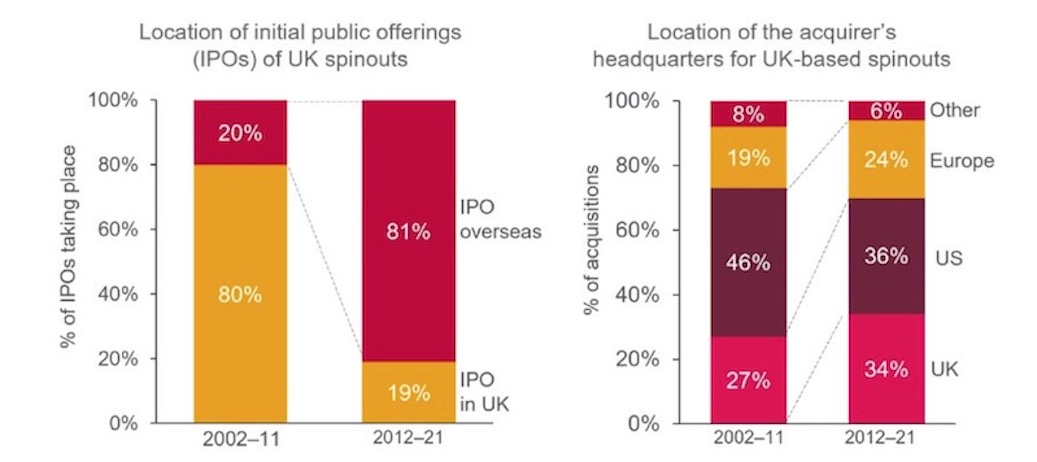
"On the other hand, later-stage financial investments are much safer, since at this point, business have currently tested out their product or services, and are concentrating on scaling and growth. Compared to their early-stage counterparts, later-stage startups have fairly lower threat of failure. Multiples created from financial investments made to mature businesses tend to be stabler, however you are much less most likely to see outsized returns there."Accredited financiers are getting more methods to purchase mid- to late-stage companies through broadening types of items such as interval funds that have lower management costs and carried-interest profit-sharing requirements, a shorter liquidity timeline and diversified holdings, according to Aaron White, the chief growth officer of Bay Area, California-based.

Latest Posts
How Digital Transformation Optimises British Enterprise Growth

Ethical Mandates and Sustainable Finance Models

Navigating a 2026 Global Report